Last reviewed: 26 August 2026
We South Africans have a deep love for the sun — but over time, it doesn’t always return the favour. I recently treated a patient, a long-time Melkbos beach regular, who felt her skin was beginning to reflect years of sun exposure in a way that no longer aligned with how she felt.
The approach wasn’t to overcorrect or intervene aggressively. Instead, it was about restoration — gently reawakening the skin’s natural vitality and refining its texture in a way that feels effortless and authentic. That philosophy sits at the heart of everything I do: achieving elegant, natural-looking results without surgery.
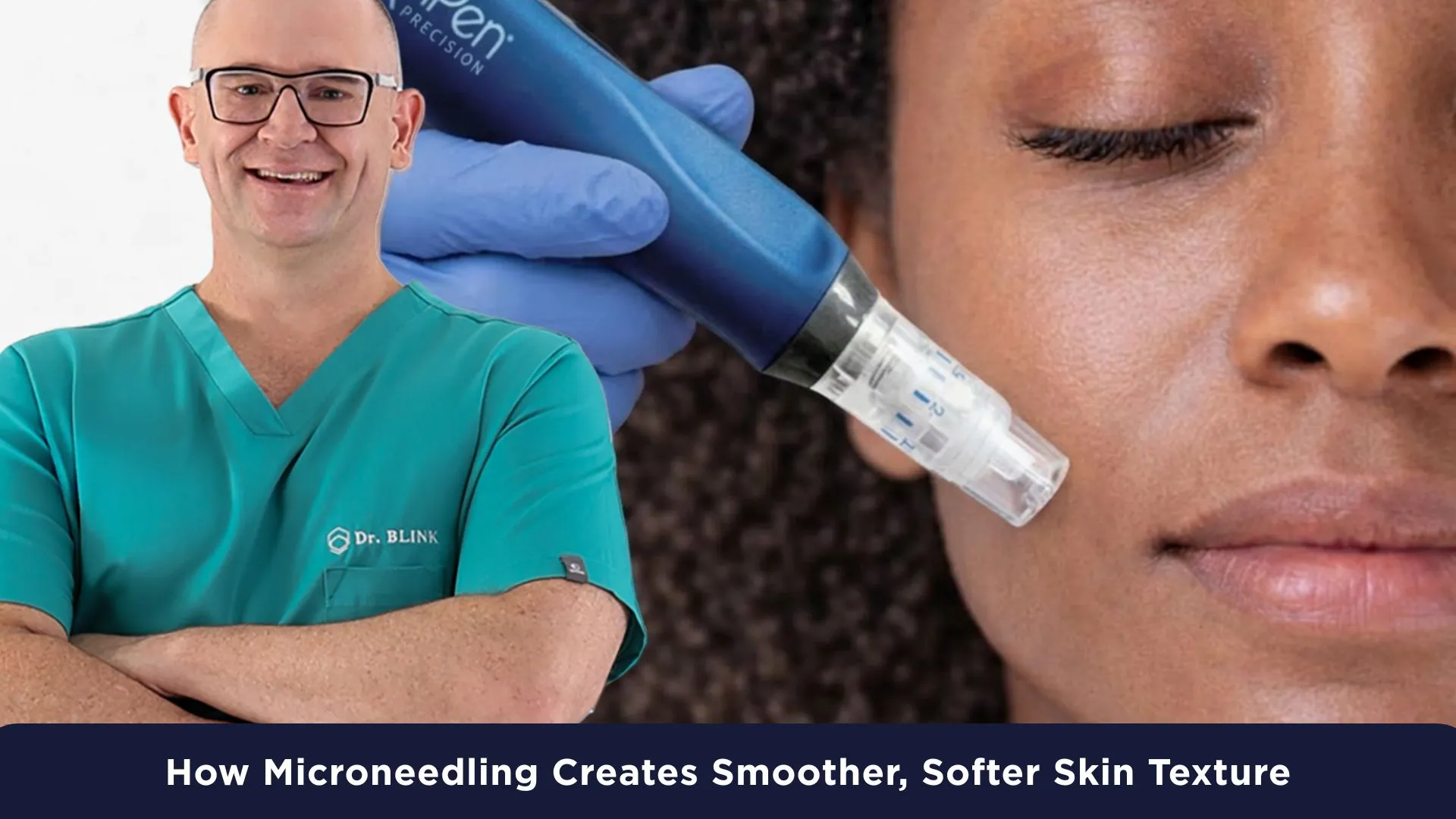
One of the treatments I return to time and again for this is microneedling with the SkinPen. It’s precise, sophisticated, and delivers beautifully consistent results.
Before we explore why it remains such a cornerstone in my practice, let’s begin with the basics.
What Is SkinPen?
SkinPen is a medical-grade microneedling device developed by Crown Aesthetics. It holds the distinction of being the first microneedling device to receive FDA clearance in the United States, and it has since earned CE marking and global recognition as a trusted clinical tool.
In my Blouberg practice, I use the SkinPen Precision system: a handheld pen-shaped device with a disposable, sterile needle cartridge at the tip. Each cartridge is used once, for a single patient, and then discarded. This is a key point I’ll return to when we compare it to other options.
The SkinPen is classified as a medical device, which means it is only available through physicians’ offices or establishments operating under medical directorship.
What Does SkinPen Do?
SkinPen creates thousands of tiny, controlled microchannels in the skin’s surface layers. These micro-injuries are so small that they are invisible to the naked eye, but they are enough to trigger the body’s natural healing cascade. The process unfolds in three well-established stages:
• Inflammation: The immune system rushes to the treatment area, increasing blood flow and clearing the way for repair. This prepares the skin to rebuild with fresh, healthy cells.
• Proliferation: New skin cells multiply to replace the damaged ones, while collagen and elastin fibres begin to form. This builds a fresh foundation of skin tissue with renewed strength and elasticity.
• Remodelling: The final stage supports the skin’s natural regeneration, revealing healthier, more rejuvenated skin over the weeks and months that follow.
Importantly, SkinPen is non-thermal and non-ablative. There is no heat involved, and we are not burning away the top layer of skin. The device also upregulates TGF-beta3, a signalling protein that helps skin heal without scarring, which is why it works so well for acne scars and stretch marks.
What Does SkinPen Help With?
Because SkinPen works by rebuilding the skin from within, it is effective across a wide range of concerns. In my practice, I use it most commonly for:
• Acne scars (including rolling, boxcar and ice-pick scars)
• Fine lines and wrinkles, including neck wrinkles
• Enlarged pores
• Rough or uneven skin texture
• Stretch marks
• Pigmentation conditions, including melasma
• Overall skin dullness and loss of firmness
One of the results that patients often notice first is a brighter, more radiant complexion within one to two weeks. The deeper collagen remodelling continues to improve skin quality for three to six months after a course of treatment.
SkinPen for Melasma
Melasma is one of the most stubborn pigmentation conditions we treat in Cape Town. It presents as patchy brownish or greyish discolouration, most commonly on the cheeks, forehead, bridge of the nose and upper lip. It’s triggered by UV exposure, hormonal changes and genetics, and it tends to sit in the deeper layers of the skin, which is what makes it so difficult to treat.
Since it uses no heat whatsoever, SkinPen does not risk triggering the rebound hyperpigmentation that heat-based treatments can cause. Instead, it works mechanically; the micro-channels break up pigment deposits and stimulate the production of new, healthy skin cells, which gradually replace the discoloured tissue.
Research published in PMC (National Institutes of Health) found that microneedling has tremendous potential for treating melasma, particularly when combined with topical therapies. The combination approach allows active ingredients to penetrate far more deeply through the micro-channels, enhancing their effectiveness.
Why Dr Blink Recommends SkinPen
There are many microneedling devices on the market. I use SkinPen for specific reasons.
First, it is the most rigorously validated device in its category. SkinPen was the first FDA-cleared microneedling device in the world, supported by over 90 clinical studies and validation trials. When I choose a tool for my patients, I need confidence in the evidence behind it.
Second, it is safe for all Fitzpatrick skin types. Because it uses no heat, it does not carry the risk of dyspigmentation that some laser and light treatments do. In a diverse country like ours, this matters enormously.
Lastly, the precision of the device allows me to customise needle depth and speed for each patient and each area of the face. This level of control simply is not possible with older or more basic microneedling tools.
SkinPen vs Traditional Microneedling
Traditional microneedling can involve manual stamp devices or roller-based tools. These approaches are effective at stimulating collagen, but they offer limited control over needle depth, speed and consistency. The result depends heavily on the technique of the individual practitioner, and coverage in areas like around the nose or eyes can be inconsistent. Increases risk of infection – others reuse the stamp / roller – not sterilising the device properly between treatments
SkinPen, by contrast, uses a motorised oscillating mechanism that drives needles vertically into the skin at a consistent rate. The needle depth is adjustable from 0.25mm to 2.5mm, allowing me to tailor each pass to the treatment area and the patient’s specific concern. Shallow settings suit general rejuvenation; deeper settings address scar tissue or pronounced wrinkles.
The ActiSine™ technology in the SkinPen Precision Elite cartridge also eliminates the risk of scratching or dragging, a common issue with spring-mechanism devices, by using active needle retraction. This means a smoother, more comfortable treatment with less unnecessary trauma to surrounding tissue.
SkinPen vs. Dermaroller
The dermaroller was the original microneedling tool, introduced in the mid-1990s. It consists of a drum or barrel covered in needles, attached to a handle, which is rolled across the skin. While it laid the foundation for the modern microneedling industry, it has significant limitations compared to a device like SkinPen.
Needle Angle
A dermaroller’s needles enter the skin at an angle (approximately 45 degrees) as the drum rolls across the surface. This angled entry can cause tearing and dragging of the skin, which creates less controlled wounds than the clean, vertical channels made by SkinPen. SkinPen’s needles penetrate at 90 degrees, straight down, resulting in cleaner micro-channels, less skin trauma, and a quicker recovery.
Hygiene
Traditional dermarollers are designed for repeated use, which raises real concerns about sterility. Dead skin cells, bacteria and other material can remain on the needle drum between uses, even with careful cleaning. SkinPen uses a single-use, individually packaged sterile cartridge for every treatment. There is no question about hygiene.
Precision and Customisation
Dermarollers have a fixed needle length, which means the same depth is applied across every area treated. SkinPen’s adjustable depth settings allow me to treat the delicate skin around the eyes at a different depth to the thicker skin on the cheeks or forehead, and to address scar tissue with greater penetration where needed.
Frequently Asked Questions
Is it safe for all skin types?
Yes. Because SkinPen is non-thermal, it does not carry the pigmentation risks associated with laser or light-based treatments. It is suitable for all Fitzpatrick skin types, including the deeper skin tones common in our diverse South African community.
How many sessions will I need?
Most patients benefit from three to six sessions, spaced four weeks apart. You will notice improvement after the first session, but the real transformation happens as collagen rebuilds over subsequent treatments and the months that follow.
Does it hurt?
With our numbing cream, the vast majority of patients find it very comfortable — more of a vibration or light scratching than actual pain. It is considerably more comfortable than dermabrasion.
When will I see results?
A brighter, more refreshed glow is typically visible within one to two weeks. The deeper collagen remodelling continues to improve skin texture, firmness and tone for three to six months after your last session.
Dr Blink: Reveal Your Best Skin
Aging gracefully isn’t about looking like a different person. It’s about looking like the best, most refreshed version of yourself. SkinPen does exactly that: helping your skin do what it does naturally, with a little expert guidance.
If you’re ready to ditch the filters, book an appointment at Dr Blink Medical Aesthetics in Bloubergstrand. Let’s get you glowing.
