Last reviewed: 31 August 2026
In my years of clinical practice here in Cape Town, I’ve consulted with countless patients who feel they’ve reached a plateau. Despite a disciplined regimen of high-end serums and at-home chemical exfoliants, there often comes a point where the skin simply stops responding. This is understandable. Topical care is essential for maintenance, but it frequently can’t address deeper structural concerns like acne scarring, laxity, and the cumulative effects of the South African sun.
This is where Collagen Induction Therapy (CIT), also known as micro-needling, represents a genuine step up in how we approach skin health. CIT isn’t a superficial polish. It’s a medical procedure that uses controlled, microscopic punctures to trigger deep cellular regeneration, working through the skin’s own repair biology rather than around it.
How Micro-Injuries Trigger Transformation
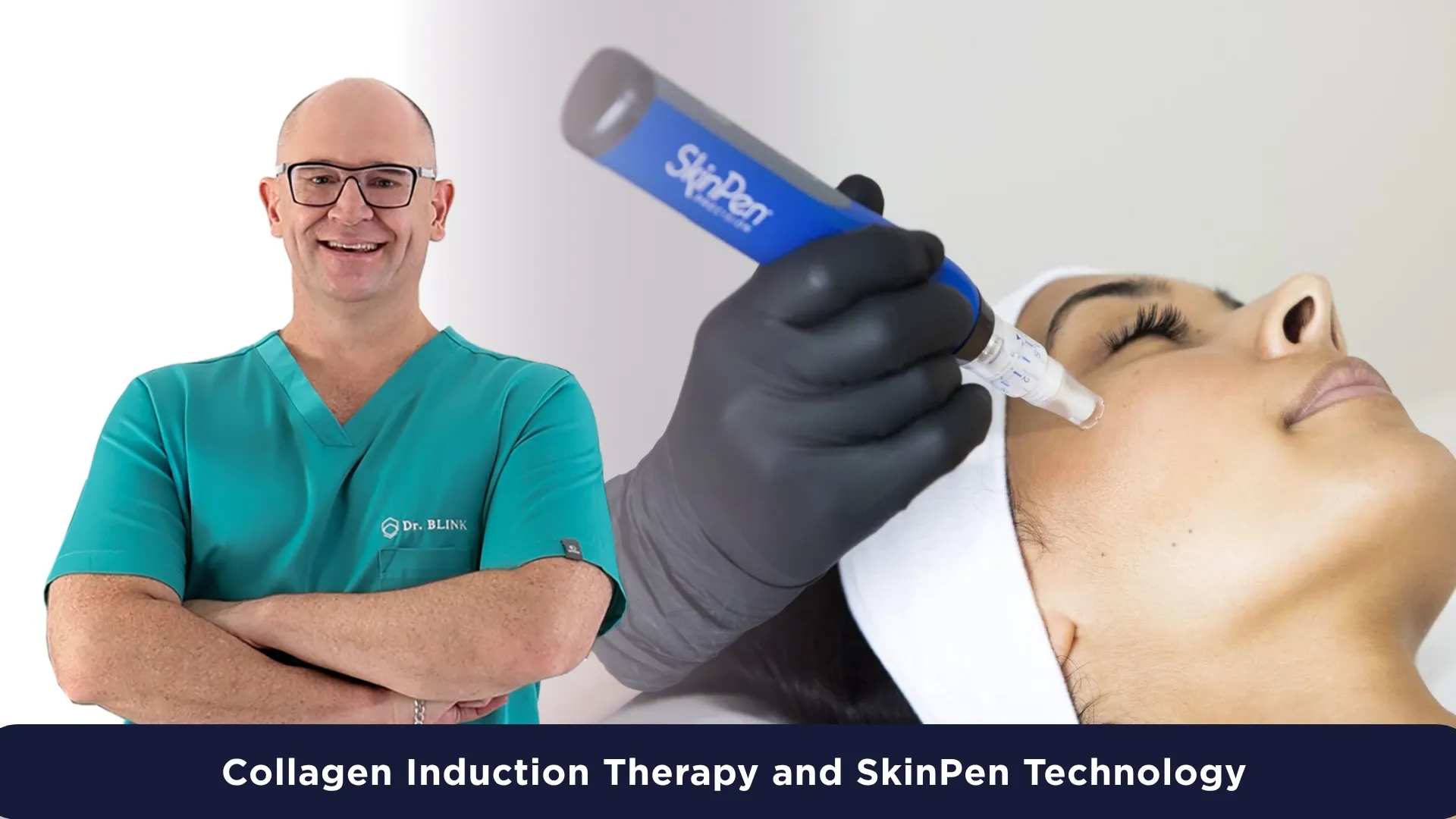
The science behind CIT, or microneedling, is rooted in the body’s natural wound healing cascade. In my clinic, I use the SkinPen device to create controlled micro-channels in the skin, signalling it to initiate a precise repair process. The goal is to encourage Type 1 collagen, the high-quality protein responsible for elasticity, rather than the disorganised Type 3 collagen typical of scar tissue.
The healing cascade follows three distinct stages:
- Inflammation. The immediate response, where the body releases growth factors to begin tissue repair.
- Proliferation. New tissue and blood vessels form, and fibroblasts, the skin’s “engine room,” start producing new structural proteins.
- Remodelling. The final stage, where the skin tightens as new collagen fibres align, strengthen, and integrate into the dermal matrix.
As with most regenerative treatments, results depend heavily on consistency, meaning a proper course of sessions matters more than any single treatment.
The SkinPen Precision Advantage: Why Technology Matters
The device matters as much as the hand holding it. I use the SkinPen Precision System, the first microneedling device to receive FDA clearance and the only Class IIa microneedling device recognised by the FDA for this purpose. It’s cleared to improve the appearance of facial acne scars in adults aged 22 and older, with an additional indication for improving the appearance of neck wrinkles.
Compared to older, manual derma rollers, SkinPen’s motorised, vertical needle action creates cleaner, more controlled micro-channels rather than the dragging, angled entry associated with rolling devices. That matters clinically: less unnecessary tissue trauma generally means a more comfortable treatment and a smoother recovery.
Clinical Indications: Is Microneedling Right for You?
SkinPen is clinically indicated for the treatment of facial acne scars in adults aged 22 and older, and for improving the appearance of neck wrinkles. In my practice, I also apply this regenerative technology to a broader range of concerns, particularly those our local environment tends to worsen:
- Skin laxity and thinning. Rebuilding structural strength in ageing skin.
- Pigmentation and sun damage. Supporting skin recovery from the intense Western Cape UV levels.
- Enlarged pores and rough texture. Refining the skin’s surface over a course of treatments.
- Stretch marks and surgical scars. Encouraging remodelling of hardened scar tissue.
Key cautions and contraindications. While CIT is a safe procedure in the right hands, it is still a medical one. I don’t recommend it for patients with active acne, active herpes simplex, eczema, or a history of keloid scarring. If you’ve used Isotretinoin (Accutane) on a high dosage within the last year, we’ll need to delay treatment until your skin’s healing capacity has properly recovered.
What to Expect at Your Microneedling Appointment
Many of my patients get the best results by pairing micro-needling with a tailored chemical peel beforehand; a gentle AHA-based option lifts away dulled surface cells and helps prepare the skin for the needling to follow.
The treatment journey:
- The session. A typical SkinPen session runs 30 to 60 minutes, including the application of a topical numbing cream for comfort.
- Day 1. Expect erythema (redness) and mild swelling, similar in appearance to mild sunburn.
- Days 2 to 3. Redness generally fades, though you may notice light flaking or dryness as the skin renews.
- Beyond day 3. Most patients are back to normal activities within 1 to 3 days, with visible improvements building over the following 1 to 2 weeks.
For best results, I generally recommend a course of 3 to 6 treatments, spaced 4 to 6 weeks apart, with ongoing maintenance thereafter.
Essential Aftercare for the Cape Town Climate
The South Eastern wind and coastal salt air in Cape Town can be particularly drying for skin that’s just been through a procedure. Your aftercare matters just as much as the treatment itself:
- Sun protection. Apply a broad-spectrum SPF 50+ daily without fail. Our climate’s UV index makes this non-negotiable, not optional, in the weeks after treatment.
- Avoid harsh actives. Steer clear of Retinol, Vitamin A, AHAs, and BHAs for at least 7 days post-procedure.
- Keep hydration simple. Stick to “clean” formulas, such as pure Hyaluronic Acid or a proper post-procedure balm, to support the skin barrier without irritation.
- Manage your temperature. Avoid heavy workouts, saunas, or steam rooms for at least 72 hours to prevent excessive inflammation.
Dr Blink: An Investment in Regenerative Health
The shift from aggressive resurfacing to regenerative, doctor-led care marks a genuine change in how aesthetic medicine works. At its heart, my practice is about moving away from temporary surface fixes and toward lasting structural integrity.
True skin transformation is a matter of precision, not force. I’d encourage you to book a professional medical assessment so we can build a treatment plan tailored to your unique skin and goals.
Work with your skin’s natural biology to restore the vitality and strength you deserve. Book an appointment today.
