
Last reviewed: 27 August 2026
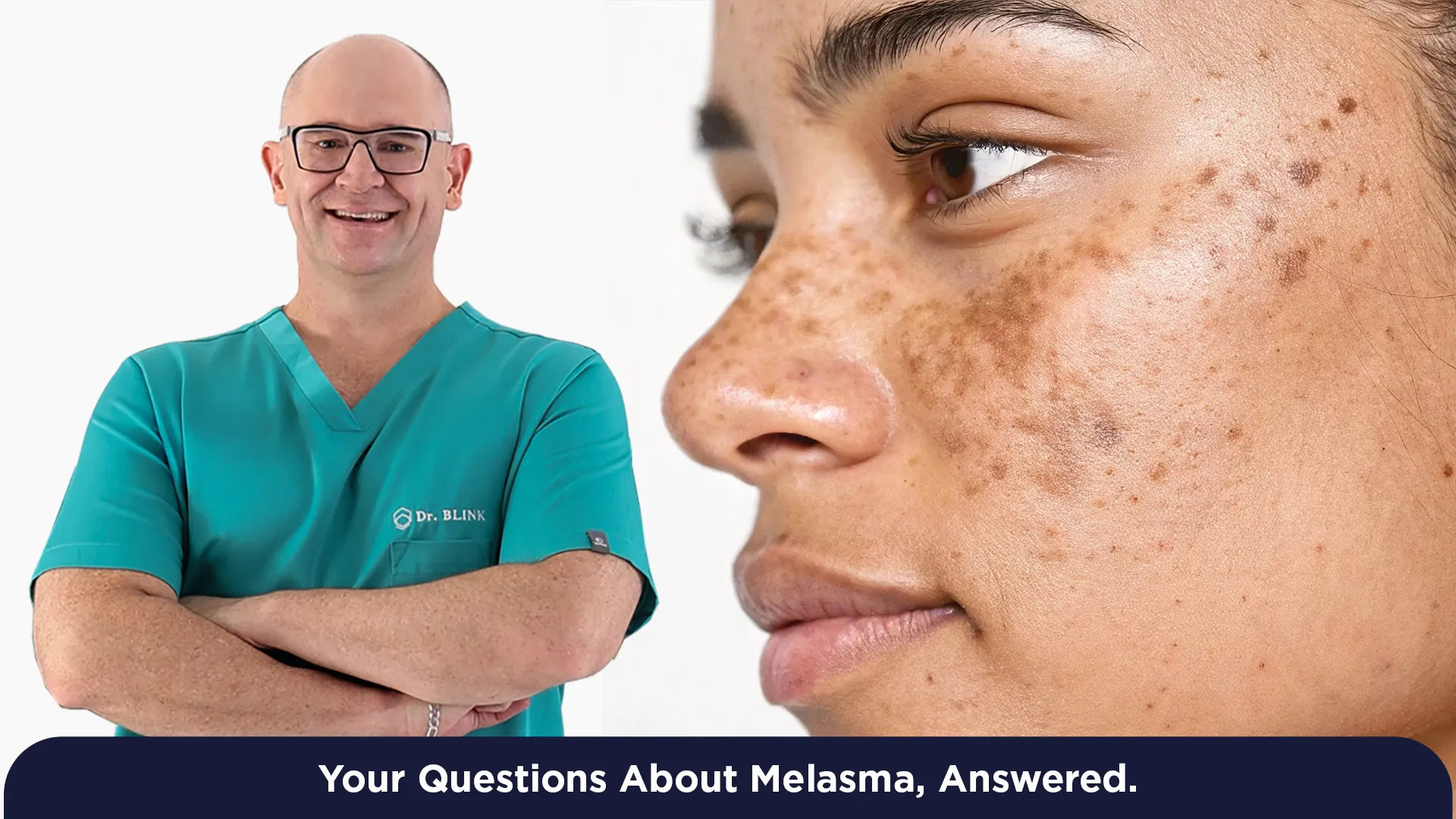
For many of our patients, melasma is more than skin deep—it’s something they feel, not just see. The soft, symmetrical shadows that appear across the forehead and cheeks can be difficult to fade, even with the most diligent skincare, often leaving one feeling frustrated and self-conscious.
At Dr. Blink Medical Aesthetics, we view melasma through a more refined lens. It is not simply a cosmetic concern, but a complex and multifactorial condition—shaped by internal biology, environmental exposure, and overall well-being. This understanding allows us to treat melasma with intention, precision, and care.
In this article, we guide you through everything you need to know: what causes melasma, how it can be effectively treated, and how to maintain clear, radiant skin long-term.
Is This Melasma? How to Spot the Signs
Diagnosing melasma is largely clinical, centered on distinctive, symmetrical patterns. Unlike sunspots, which appear sporadically, melasma mirrors itself across the face:
- Centro facial (50–80% of cases): The most prevalent pattern, affecting the forehead, nose, and upper lip.
- Malar: Localised specifically to the cheeks.
- Mandibular: Appearing along the jawline and chin.
Understanding Depth
The difficulty of our “clearing” journey depends on how deeply the melanin is situated.
| Type | Depth of Pigment | Treatment Outlook |
| Epidermal | Surface layer | Most responsive to topical inhibitors. |
| Dermal | Deep layer | Stubborn; requires professional procedural synergy. |
| Mixed | Both layers | Requires a multimodal, long-term marathon approach. |
What Causes Melasma?
Melasma pathogenesis is a complex “fire” fuelled by several factors. Here is the clinical breakdown of what flips the switch:
Genetic Predisposition
This is the primary risk factor. Nearly 300 genes influence how your skin responds to light and hormones.
The Hormonal “Fuel”
While pregnancy (the “mask of pregnancy”) and contraceptives are famous triggers, clinical specifics matter. High progesterone and low prolactin levels are frequently identified in patients.
Estrogen and progesterone essentially “fuel the fire” of the tyrosinase enzyme. While progesterone can inhibit melanocyte proliferation in isolation, in the context of melasma, it is a potent trigger for pigment production.
Environmental Triggers
It’s not just “the sun.” The main causative triggers include UVA1, High-Energy Visible Light (HEVL/Blue light), and heat.
The Heat and Vascular Factor
Heat is a silent flare-trigger because it increases vascularisation through Vascular Endothelial Growth Factor (VEGF). This dilates blood vessels, which can actually “feed” the melanocytes and maintain the inflammatory environment that melasma loves.
Internal and Metabolic Links
Melasma is often a “concomitant” finding in patients with thyroid dysfunction, Polycystic Ovarian Syndrome (PCOS), or insulin resistance.
Can Melasma Be Cured?
I always advise my patients with the clinical reality: Melasma is a chronic and recurring condition.
There is currently no permanent cure. Our goal is to effectively manage melasma, not cure it. We can achieve incredible clarity, but the skin retains a memory for producing that pigment.
Think of it as a sleeping giant. A single afternoon of unprotected heat or UV exposure can wake it up. Success is found in the maintenance phase: a lifelong commitment to keeping the melanocytes in a dormant state.
Professional Solutions: Your Treatment Roadmap
When topical brighteners reach their limit, we utilise medical-grade procedures. Below are some of the most tried and true treatments for managing melasma.
The Cosmelan® Depigmentation System
This is a world-leading, two-part professional system, but its success depends entirely on the clinical protocol:
- Preparation Phase (2 weeks prior): Prime your skin with specific Mesoestetic products (such as the Brightening Peel Booster and Hydracream Fusion) to strengthen the skin barrier.
- The Pre-Peel: Two days before the main mask, a professional Mesoestetic chemical peel is performed to optimise absorption.
- In-Clinic Mask: A high-potency mask is applied and left on for several hours.
- Homecare Maintenance: Use the Cosmelan 2 kit for months to inhibit the tyrosinase enzyme at the source.
Chemical Peels
We use Glycolic or TCA (Trichloroacetic Acid) chemical peels to accelerate keratinocyte turnover. This manually lifts the existing pigment out of the skin so your topicals can work more efficiently.
Microneedling & TXA Synergy
This is a clinical double-win. Microneedling creates micro-channels that allow Tranexamic Acid (TXA) to reach the deeper layers. TXA acts as a plasmin inhibitor, blocking the conversion of plasminogen to plasmin.
This microneeding stops the activation of tyrosinase and reduces the vascularity (VEGF) that often accompanies stubborn patches.
A Note on Lasers
While lasers like NAFL (Non-ablative fractional laser) can clear other pigment quickly, melasma patients may not be ideal for it due to the heat aspect of the laser which can cause more pigmentation.
Please be aware of the recurrence timeline: Melasma often returns within three to six months post-laser if strict maintenance isn’t followed.
What Active Ingredients Can You Recommend to Ensure Optimal Results?
Your at-home routine is the clinical anchor for your results.
- Thiamidol: This is currently the gold standard. While older inhibitors were identified using mushroom tyrosinase, Thiamidol was developed using a human tyrosinase model, making it significantly more effective and safer for human skin.
- Tranexamic Acid (TXA): Used topically to calm the inflammation and inhibit melanin synthesis.
- Retinoids: These inhibit tyrosinase transcription and ensure pigment isn’t dumped into the skin cells by accelerating turnover.
- Azelaic Acid or Cysteamine: Excellent medical-grade alternatives to Hydroquinone for those with sensitive skin or long-term management needs.
- Niacinamide: Blocks the transfer of pigment from the “factory” (melanocyte) to the skin cells.
How Can One Prevent Melasma?
Prevention is the most critical step in my prescription. If you are not shielding, you are essentially emptying a sinking boat with a teaspoon.
Broad-Spectrum SPF 50+
SPF is a 365-day requirement. Rain or shine, indoors or outdoors. It must cover UVA and UVB.
The Iron Oxide Factor
This is non-negotiable for melasma. Only sunscreens with Iron Oxide (typically tinted formulas) can block HEVL (Blue Light). I frequently recommend Mesoprotech Melan 130 Pigment Control, which provides comprehensive protection against UVA, UVB, HEVL and Infrared (IR).
Heat Management
Avoid saunas, steam rooms, and hot yoga.
Remember: Heat = Vasodilation = Pigment.
Dr Blink: Melasma Management Excellence
At Dr Blink Medical Aesthetics & Laser, we believe that managing melasma is a journey—one that rewards consistency, expertise, and a thoughtfully tailored approach. True, lasting results are achieved through a refined combination of advanced in-clinic treatments, high-performance skincare, and intentional lifestyle habits.
With today’s evolving science and technology, treating melasma has become more precise and effective than ever before. By addressing the condition from multiple angles—calming inflammation, supporting the skin barrier, regulating pigment production, and managing vascular factors—we are able to restore clarity and luminosity with confidence.
Your journey begins with a personalised consultation, where we design a treatment plan as unique as your skin.
Begin your path to refined, radiant skin. Contact Dr Blink Medical Aesthetics & Laser to schedule your consultation.
